New Proposed DHS Rule Effectively Ends Work Authorization for Asylum Applicants
Published Apr 22, 2026
On February 23, 2026, the Department of Homeland Security (DHS) proposed a new rule that would, in effect, eliminate work permits (“employment authorization”) for most asylum applicants in the United States.[1] The new rule ties eligibility for work permits to a statutory 180- day asylum application processing time, a threshold that USCIS cannot meet under current resource constraints and is unlikely to meet for many years. If implemented, the rule would prevent asylum applicants from lawfully working while their applications are pending, severely limiting their ability to support themselves and stabilize their lives while awaiting adjudication of their claims.
While the new rule is framed as a measure to deter frivolous, fraudulent, and/or meritless filings and reduce the resource strain on U.S. Citizenship and Immigration Services (USCIS), the structure of the rule ensures that even applicants with legitimate claims would be unable to obtain work permits due to multi-year case backlogs.
A Processing Time Bar to Employment Authorization
The proposed rule creates a processing-time bar that will prevent asylum applicants from even applying for work permits unless the average processing time for affirmative asylum applications is 180 days or less. According to the rule, this determination will be made exclusively by the USCIS Director, will not be discretionary, and will be based upon the average processing time during the 90-day period immediately preceding the Director's determination.
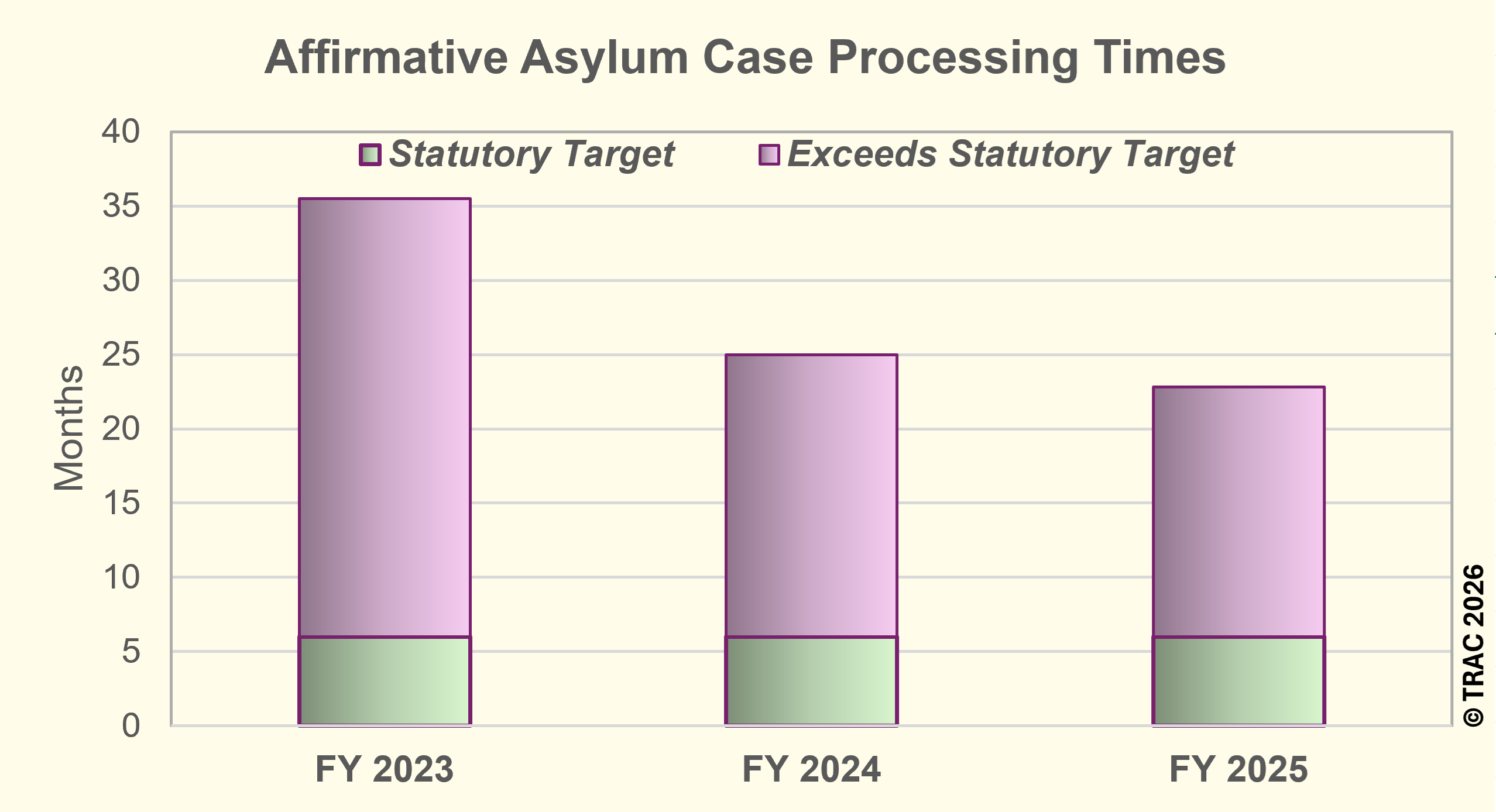
According to the proposed rule, approximately 1,525,933 asylum applications were pending before USCIS as of the end of FY2025. USCIS does not publish processing times for affirmative asylum applications. However, the proposed rule indicates that average processing time for affirmative asylum applications was 22.8 months in FY 2024, a figure that far exceeds the statutory 180-day benchmark.[2] See Figure 1. Until the average processing time drops dramatically, asylum applicants in the backlog or who file in the future will not be able to even apply for a work permit while their asylum application is pending.
Not only would the proposed rule affect noncitizens with affirmative asylum claims before USCIS, but the bar would also apply to approximately 2.3 million noncitizens with defensive asylum applications pending before the Immigration Court at the Executive Office for Immigration Review (EOIR). Until USCIS processing times are dramatically reduced, these individuals would likewise remain barred from applying for a work permit.
The rule cites 8 U.S.C. § 1158(d)(5) as authority for this new process, which provides that "…in the absence of exceptional circumstances, final administrative adjudication of the asylum application, not including administrative appeal, shall be completed within 180 days after the date an application is filed…"
While this statutory provision has never been applied as a justification to disallow the filing of work permit applications, the proposed rule states that this provision and the accompanying regulations were intended to ensure that asylum applications were completed within 180 days, with 60 days allocated for the asylum application at INS (now USCIS) and 120 days for instances where the asylum application was denied and referred to EOIR. The proposed rule states that the work permit was only intended to be a “bridge benefit” until the asylum application could be completed, not an automatic benefit to be issued for all asylum applications filed.
This analysis, however, overlooks that with over 400,000 affirmative asylum applications filed each year in fiscal years 2023 through 2025, and a current USCIS capacity to complete around 20,000 to 40,000[3] asylum applications each year, achieving a 180-day processing time will be all but impossible with current resources. See Appendix Tables 1-2 for detailed numbers. Even with an 80 percent decline in new affirmative asylum application filings as the proposed rule projects, USCIS would still need to complete two to four times the number of cases to reach a 180-day processing time even if pending applications were excluded. Once the estimated 1.5 million case backlog of applications that have already been waiting often for long periods of time is factored in, USCIS asylum officers would need to complete hundreds of thousands of additional cases each year.
Extended Waiting Period and Additional Disqualifications
The proposed rule also creates new obstacles for work permit eligibility by dramatically expanding the waiting period and imposing new disqualifications. This means that even if the 180-day processing time benchmark were ever met, applicants will have to wait additional time to even apply for a work permit, and when they do, they will be subject to potential additional disqualifications to eligibility. These barriers include:
Waiting period extended from 180 days to 365 days
Under the proposed rule, the waiting period to apply for a work permit will be significantly extended from 180 to 365 days, imposing an additional financial hardship on these applicants. Without the ability to engage in lawful employment, applicants will likely struggle to meet basic financial needs. Under current rules, asylum applicants must wait 180 days before they may apply for a work permit. The proposed rule asserts that extending the waiting period is necessary because asylum applicants file frivolous, fraudulent, or otherwise meritless asylum applications solely to obtain work permits.
New asylum eligibility restrictions
The proposed rule further restricts eligibility for asylum itself by adding several disqualifying factors such as new criminal bars as well as inflexible and unrealistic expectations of asylum seekers who enter the United States outside of a port of entry. These new disqualifying factors include: (1) a one-year asylum filing deadline that will not be waived except in instances involving victims of certain crimes and unaccompanied minors; (2) a mandatory bar for unlawful entry unless the asylum applicant files a claim for asylum within a narrow 48-hour window of time; and (3) expanded criminal-related disqualifications.
In addition, the proposed rule would make the approval of work permits fully discretionary, resulting in new inefficiencies and delays in the asylum application process that could exacerbate the backlog challenge the rule purports to address. By making work permits discretionary, an immigration officer would first have to determine if the asylum applicant is eligible for asylum before they could approve a work permit application. This will further increase rather than reduce the amount of time immigration officers would spend on each case.
Taken together, these changes significantly narrow eligibility for asylum, further restrict the ability of asylum seekers to obtain work permits, and introduce new uncertainty into an already complex process.
Denied Asylum Applications May Not Be Frivolous, Fraudulent, or Meritless
The proposed rule rests on the premise that many asylum applications are frivolous, fraudulent, or meritless. This ignores the body of evidence that outcomes of asylum cases depend on the subjective weighing of many factors so that the decision isn't a simple matter and indeed the adjudication outcomes can vary significantly depending upon the officer assigned.[4] Just because asylum is denied does not automatically mean that the application is frivolous, fraudulent or meritless.
In addition, this conclusion is not supported by even the limited data provided in the rule itself which applies to all asylum applicants. The fact is that in the vast majority of decisions on their merits over 80 percent of affirmative asylum applications were granted, and only approximately 20 percent were denied according to the latest complete fiscal year of data available covering FY2024. Further, the fact that approximately 20 percent of the denied applicants received a work permit but later had their asylum applications denied also does not automatically mean that the asylum application itself was frivolous, fraudulent, or meritless as the proposed rule suggests.
Conflicting Data and Reports Contradict Many of the Conclusions in the Proposed Rule
There are several additional data integrity issues present in the proposed rule that undermine many of the conclusions reached. Data in the proposed rule includes the total numbers of cases received, granted, denied, or administratively closed and pending cases. Yet the proposed rule relies on data that conflict with other government reports on the USCIS website for the same data points and time series. See Appendix Tables 1-2. While small data anomalies can occur depending on the exact date and time data are compiled for a report, some of the published USCIS reports contain significant deviations from the data covering the ten-year period for fiscal years 2015 through 2025 presented in the proposed rule.
While a proposed rule does not need to include other government data to validate the totals used to arrive at the conclusions provided, when such data is provided in a proposed rule it is reasonable to expect that the data is consistent with other publicly available government data. When such data is not the same, then the reasons for any discrepancies should be explained.
To illustrate: While the data purport to cover all of FY2025, they appear to be only partial-year data which leaves a misleading impression concerning current trends. The actual numbers for FY2025 correspond with figures elsewhere referenced in the proposed rule for partial year data ending on May 22, 2025.
In addition to the discrepancies with the FY2025 data points, a comparison of the data in the proposed rule to other USCIS-published reports also reveals several sizable discrepancies as shown in Appendix Tables 1-2. The number of completed cases the rule cites is generally larger - often by substantial amounts from FY2015 - FY2020, and pending cases are also larger for the entire ten-year period. For example, the rule states 129,891 asylum cases were completed in FY2024 and 180,069 during FY 2025 while published USCIS data give a lower figure for FY2024 (126,660) and a much higher figure (345,184) for FY2025. There are also sizable differences in the number of cases reported as administratively closed.
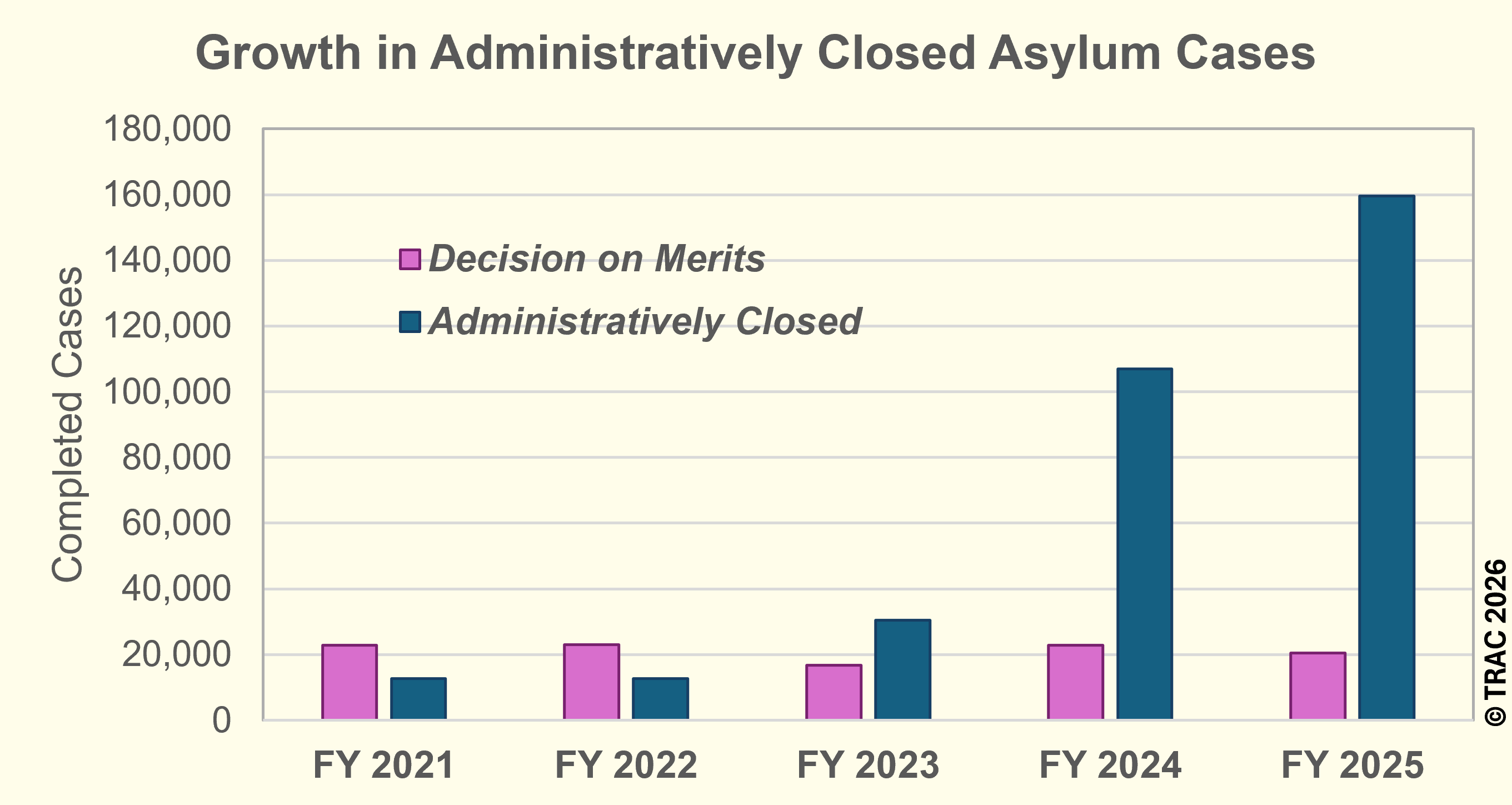
These differences affect the magnitude and growth rate of the asylum backlog, raising questions about the reliability of backlog numbers. The proposed rule states that in 2024, USCIS began using a new technology to identify affirmative asylum applications filed by applicants in removal proceedings and launched an automated process to administratively close those cases. This appears to have resulted in an exponential increase in the number of administratively closed cases beginning in FY2024. Even data cited by the proposed rule that only goes through May of FY 2025 show a dramatic increase. See Figure 2. Administratively closing such a large number of cases significantly alters the scope of the asylum applicant population and the rule’s claim that the system is overwhelmed.[5]
Eliminating Cumbersome and Unnecessarily Complex Requirements
A few of the changes in the proposed rule would eliminate cumbersome and unnecessarily complex requirements. These changes could improve the current situation. One of the proposed changes is to eliminate the separate waiting periods for eligibility to file for and later receive a work permit, so that asylum applicants would be eligible to apply for and be granted a work permit at the same time.
A second proposed change addresses the joint administration by USCIS and EOIR of the starting and stopping of the clock for the required waiting period as complex and challenging to manage, often leading to customer confusion about when the clock for an individual case starts and stops. Eliminating the starting and stopping of the clock as the rule proposes and adopting a fixed waiting period regardless of what events occur could significantly reduce complexity and applicant confusion.
A third proposal would extend the regulatory processing time to adjudicate asylum work permit applications from 30 days to 180 days. Adopting a reasonably longer regulatory processing time period than 30 days would enable USCIS to more effectively prioritize and balance the use of limited officer resources. The 30-day regulatory processing time was implemented in December 1994 when the adjudication of work permits was less complex and therefore took less time to complete. Adopting a longer regulatory processing time would incorporate time to complete the additional steps that USCIS now performs to adjudicate asylum work permit cases.
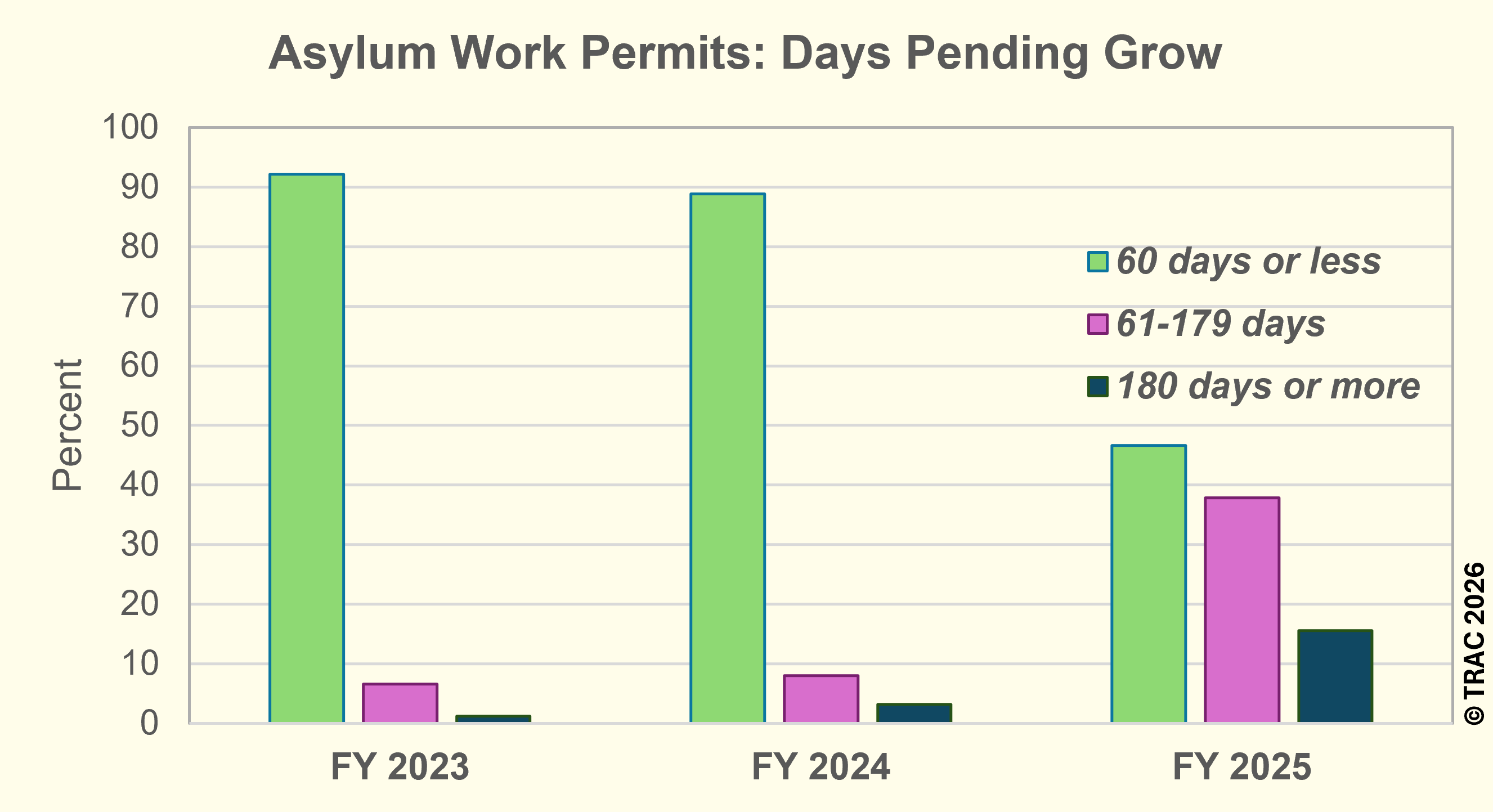
Asylum work permits are the only type of work permits with a regulatory-mandated processing time. As reflected in the bar graph below, USCIS compliance rates with the current 30-day regulatory processing requirement have declined significantly with less than half of the asylum work permit applications being completed in 60 days or less as of the end of FY2025.
Historically, USCIS completed most work permit applications for other immigration benefits in 90 days or less. The proposed rule, however, doesn't offer a rationale for 180 days versus any other defined time period. Extending it to twice the time needed for processing most other work permit applications requires a rationale.
Conclusion
The proposed rule in attempting to address a backlog of pending asylum applications recommends a solution based upon limited data and conclusions that are not well supported. The proposed rule repeatedly asserts that the filing of frivolous, fraudulent, or otherwise meritless asylum applications is the primary cause of the current backlog of asylum applications and that asylum applicants are motivated to file solely to obtain work permits. Rather than address the underlying causes of the backlog, the proposed rule seeks to limit access to the asylum application process entirely by creating conditions that would make it extraordinarily difficult to obtain a work permit while an asylum application is pending.
| Fiscal Year | Data from Proposed Rule | USCIS Published Reports* | ||||
|---|---|---|---|---|---|---|
| Receipts | Completed | Pending | Receipts | Completed | Pending | |
| 2015 | 83,463 | 34,546 | 118,217 | 84,236 | 14,709 | 108,725 |
| 2016 | 116,295 | 27,746 | 206,764 | 115,888 | 9,669 | 194,986 |
| 2017 | 142,254 | 42,939 | 306,078 | 142,760 | 13,221 | 289,835 |
| 2018 | 108,308 | 70,738 | 343,647 | 106,041 | 18,263 | 319,202 |
| 2019 | 101,035 | 70,094 | 374,588 | 96,861 | 20,575 | 339,836 |
| 2020 | 99,152 | 51,565 | 422,173 | 93,134 | 39,277 | 386,014 |
| 2021 | 65,518 | 35,509 | 452,181 | 61,158 | 39,681 | 412,796 |
| 2022 | 247,790 | 35,678 | 664,290 | 195,279 | 41,160 | 571,628 |
| 2023 | 464,398 | 47,247 | 1,081,440 | 455,054 | 54,211 | 1,022,163 |
| 2024 | 422,457 | 129,891 | 1,374,006 | 419,825 | 126,660 | 1,344,743 |
| 2025 | 331,883 | 180,069 | 1,525,933 | 407,849 | 345,814 | 1,435,560 |
| Fiscal Year | Data from Proposed Rule | USCIS Published Reports* | ||||
|---|---|---|---|---|---|---|
| Approved | Denied* | Admn. Closed | Approved | Denied* | Admn. Closed | |
| Number | ||||||
| 2015 | 13,797 | 15,515 | 5,234 | 14,344 | 365 | 0 |
| 2016 | 9,112 | 12,636 | 5,998 | 9,538 | 131 | 0 |
| 2017 | 12,284 | 22,189 | 8,466 | 13,105 | 116 | 0 |
| 2018 | 16,383 | 41,295 | 13,060 | 17,537 | 726 | 0 |
| 2019 | 17,129 | 42,213 | 10,752 | 19,945 | 630 | 0 |
| 2020 | 9,952 | 27,841 | 13,772 | 10,461 | 28,816 | 0 |
| 2021 | 5,793 | 17,023 | 12,693 | 7,118 | 17,888 | 14,675 |
| 2022 | 7,576 | 15,452 | 12,650 | 10,099 | 17,059 | 14,002 |
| 2023 | 10,811 | 5,963 | 30,473 | 15,468 | 5,848 | 32,895 |
| 2024 | 17,175 | 5,709 | 107,007 | 16,932 | 4,600 | 105,128 |
| 2025 | 8,667 | 11,872 | 159,530 | 16,521 | 26,434 | 302,859 |
| Percent | ||||||
| 2015 | 39.9% | 44.9% | 15.2% | 97.5% | 2.5% | 0.0% |
| 2016 | 32.8% | 45.5% | 21.6% | 98.6% | 1.4% | 0.0% |
| 2017 | 28.6% | 51.7% | 19.7% | 99.1% | 0.9% | 0.0% |
| 2018 | 23.2% | 58.4% | 8.5% | 96.0% | 4.0% | 0.0% |
| 2019 | 24.4% | 60.2% | 15.3% | 96.9% | 3.1% | 0.0% |
| 2020 | 19.3% | 54.0% | 26.7% | 26.6% | 73.4% | 0.0% |
| 2021 | 16.3% | 47.9% | 35.7% | 17.9% | 45.1% | 37.0% |
| 2022 | 21.2% | 43.3% | 35.5% | 24.5% | 41.4% | 34.0% |
| 2023 | 22.9% | 12.6% | 64.5% | 28.5% | 10.8% | 60.7% |
| 2024 | 13.2% | 4.4% | 82.4% | 13.4% | 3.6% | 83.0% |
| 2025 | 4.8% | 6.6% | 88.6% | 4.8% | 7.6% | 87.6% |
| Date | Number of Days Pending* | Total Pending Applications | Pending |
|---|---|---|---|
| Sep-23 | 60 or fewer | 71,725 | 92.20% |
| Sep-23 | 61 - 90 | 2,259 | 2.90% |
| Sep-23 | 91 - 121 | 1,213 | 1.56% |
| Sep-23 | 122 - 179 | 1,630 | 2.10% |
| Sep-23 | 180 or more | 964 | 1.24% |
| Total Applications | 77,791 | 100.00% | |
| Sep-24 | 60 or fewer | 67,508 | 88.85% |
| Sep-24 | 61 - 90 | 2,824 | 3.72% |
| Sep-24 | 91 - 121 | 1,802 | 2.37% |
| Sep-24 | 122 - 179 | 1,430 | 1.88% |
| Sep-24 | 180 or more | 2,418 | 3.18% |
| Total Applications | 75,982 | 100.00% | |
| Sep-25 | 60 or fewer | 63,534 | 46.40% |
| Sep-25 | 61 - 90 | 19,538 | 14.27% |
| Sep-25 | 91 - 121 | 15,960 | 11.66% |
| Sep-25 | 122 - 179 | 16,591 | 12.12% |
| Sep-25 | 180 or more | 21,309 | 15.56% |
| Total Applications | 136,932 | 100.00% |